
An Author’s Journey: Highlighting the Story of Alice Walker
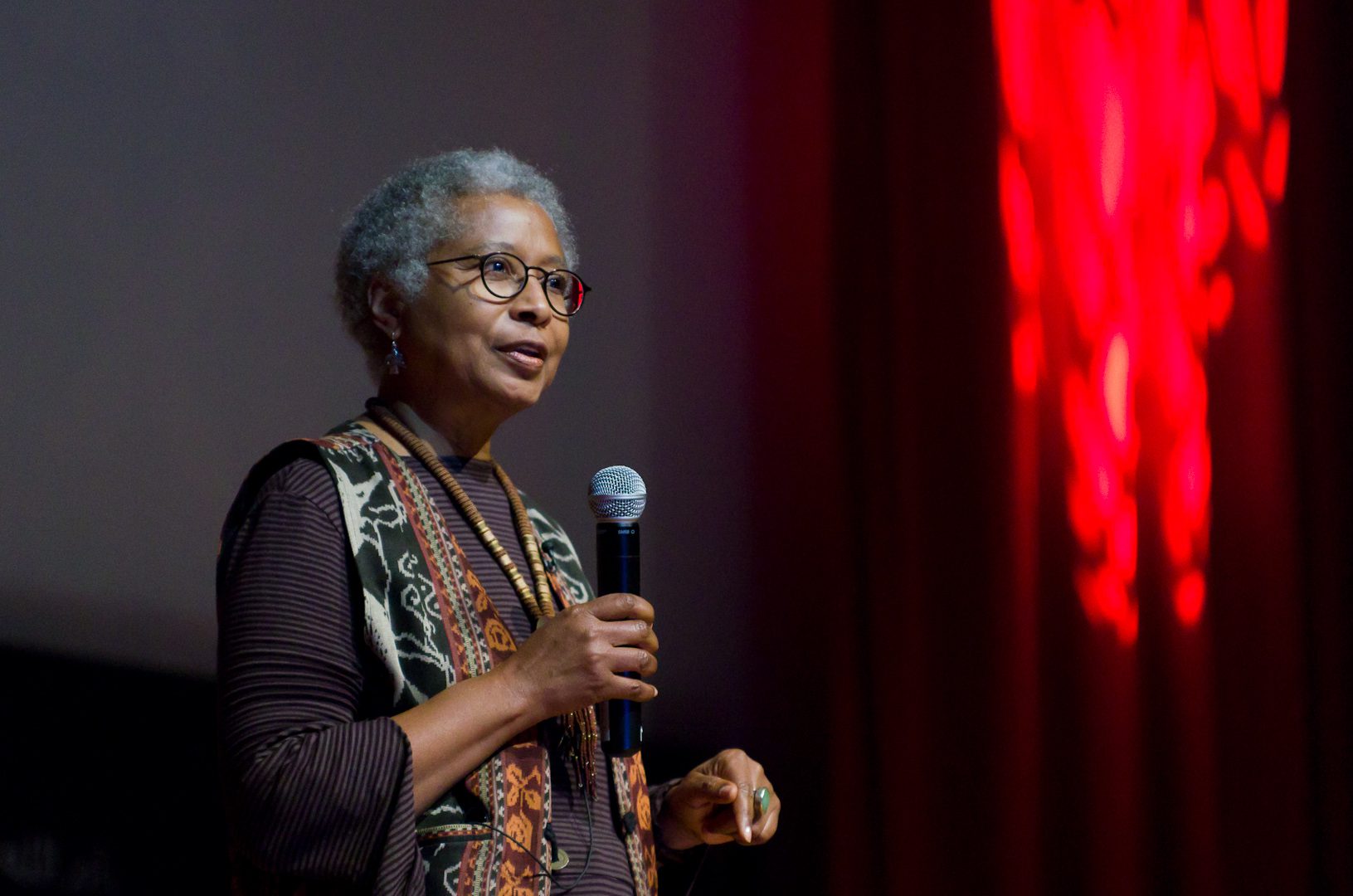
At The Dot Experience, we uplift the voices and stories of people who are blind or low vision. This month, we celebrate Alice Walker—an iconic American author whose storytelling has shaped generations. Best known for her Pulitzer Prize winning novel The Color Purple, Alice — who also happened to be blind in one eye, has long used her voice to explore joy, resilience, identity, and the strength found in personal experience.
Alice Walker’s Blindness Journey
Alice Walker was born in Eatonton, Georgia on February 9th, 1944. She was the youngest of eight children, and her parents were sharecroppers. At the age of eight, she lost the ability to see out of her right eye when one of her older brothers shot her with a BB gun by accident while they were playing a game outside. Afraid of getting in trouble, Alice’s brothers convinced her to lie about how she got injured by saying she stepped on one end of a piece of wire and the other hit her in the eye. Afterwards, the children told their parents the fabricated story, and Alice sat on a bench on the porch while they examined her eye. She recounted,
“There is a tree growing from underneath the porch that climbs past the railing to the roof. It is the last thing my right eye sees. I watch as its trunk, its branches, and then its leaves are blotted out by the rising blood.”
Following the incident, young Alice was in shock. She experienced a fever and chills, and soon, her parents discovered the truth behind the accident. However, since the family did not have a car, Alice didn’t receive medical attention until a week later. The doctor told Alice that if one eye is blind, the other will follow. Luckily, this prediction did not come to pass, but Alice’s blindness did become a part of her identity. Alice tells the full story of her vision loss in her essay, “Beauty: When the Other Dancer Is the Self.”
Words to Live By
In an article titled, “LIFE LESSONS: Gratitude is my only prayer,” Alice Walker wrote, “If you love doing it, it isn’t ‘work.’” The author mentioned that the time she spent writing over thirty books and doing other hobbies, like gardening, felt like no time at all. She was so engrossed that the minutes and hours passed quickly. Thus, readers learn that everything worth doing, even work, should be enjoyable and finding delight even in the simplest of tasks makes time fly.
Many of Alice’s works can be found at the National Library Service for the Blind and Print Disabled (NLS), Library of Congress, which is a resource for older students and adults who are blind or have low vision. View Alice’s author page on the NLS website. At The Dot Experience, you’ll discover powerful stories from Dream Believers and Barrier Breakers like Alice Walker. We look forward to sharing these stories with you when we open this fall!
Photo Credit: Lazar Simeonov
Share this article.
Related articles
APH Library: Three Unique Collections
What is the APH Library? The APH Library is composed of three unique and valuable collections: the M.C. Migel Memorial Collection,...

The Louis Website Ecosystem
The Louis website, named in honor of Louis Braille, offers access to 4 powerful databases useful to educators, researchers, parents,...

Blind Musicians Collection Listening Station
Do you know a blind or low-vision artist who has recorded music? We would love to preserve their legacy, alongside...