
At APH Press, Peer Reviewers Lead Us to Excellence

Creating a book for APH Press is a rigorous process that starts with recruiting the most knowledgeable experts in our field to write the highest quality textbooks available for personnel preparation programs that train students to become teachers of students with visual impairments (TSVIs) and orientation and mobility (O&M) specialists. We take great pride in the fact that our textbooks are cornerstones of blindness and low vision studies, and that’s possible only because of our brilliant, passionate collaborators.
The authors and editors are not the only voices that weigh in on our books, though. To ensure that an APH Press book contains the most valuable, up-to-date, and comprehensive information possible, we perform a double-anonymized peer review process in which a group of experts reviews the manuscript and provides feedback and suggestions for the editors as they revise the manuscript for publication. Peer review is crucially important to creating an excellent academic text, as it serves three key functions.
First, it improves the quality, recency, and comprehensiveness of the information that is incorporated into a text. Bringing in more experts means assembling the wisdom of more people who are up to date on their fields’ supporting research, and peer reviewers are empowered to suggest new avenues to explore in our textbooks. Writing a chapter or even a whole book for us is an involving process that demands time and intense focus—locking in on such a large project sometimes means that the writer’s latest issues of the Journal of Visual Impairment & Blindness (JVIB) go unread for the moment, so having other peers reviewing the work ensures that the most up to date research is included. More than that, though, it’s important to make sure that different perspectives are included when research is still developing or there is not a consensus on a topic. Peer reviewers are able to point our authors and editors to what matters most in the field right now and what will matter in the future.
Second, peer review ensures that the text is applicable across the field. If one of our writers has spent their career working with students in an urban environment, for example, they wouldn’t have as much lived experience working with rural students in their natural environment. Similarly, a writer who is writing about teaching for a book like Accessible Mathematics Instruction for Students With Visual Impairments can benefit from peer reviewers who share their own experiences in the classroom—after all, the work of a TSVI requires constant improvisation, so hearing about the many ways that teachers are solving problems with their students can only strengthen the book. It’s no surprise that no one person can hold the entirety of the field in their head at once, but peer reviewers give our authors and editors valuable insights that help fill in any potential gaps.
Finally, peer review provides the academics and professionals who participate in the process with valuable experience and a say in their field (not to mention credit toward their service record and an honorarium). Many of the peer reviewers of today will be the leading experts of tomorrow, and that starts with their involvement in a part of the textbook writing and editing process that few people get to experience. It is tremendously rewarding to know that your perspective has made a difference in the lives of students who are blind or have low vision, the future professionals who are earning their degrees and certifications, and the practitioners who rely on up-to-date, practical knowledge to do the work of ensuring their students and clients live more rewarding lives.
Becoming a peer reviewer for APH Press is a fantastic way for academics and experts to help shape the conversations at the forefront of their disciplines. If that sounds intriguing to you, we would love for you to get involved. The first step is joining our pool of peer reviewers by completing our Peer Review Interest Form. We are currently recruiting for upcoming titles, including Instructional Strategies for Braille Literacy, 2nd Edition and Collaborative Assessment: New Perspectives on Educating Students with Visual Impairments, Including Students With Multiple Disabilities. Even if those projects don’t fit your interests, you can fill out the form anyway. We will keep you on file for future projects.
Share this article.
Related articles
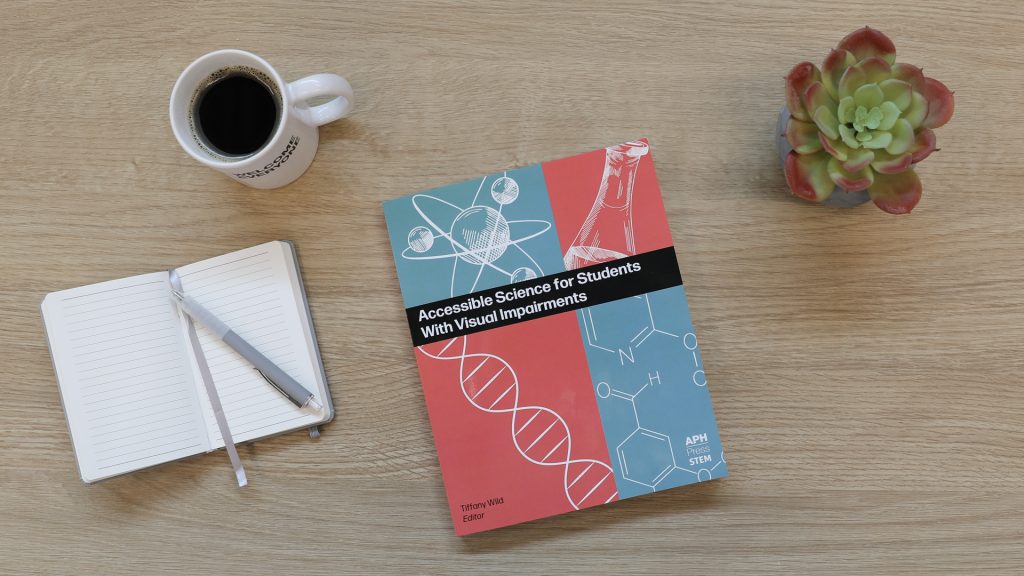
Accessible Science: Ensuring Science is for Everyone
The modern world thrives on innovation, and the best innovation comes from a multitude of perspectives working together. That’s what’s...

Reach Out and Teach: Helping Your Child Who is Blind or Low Vision Learn and Grow
At APH Press, we strive to create books that provide both parents and professionals with the knowledge and resources they...

APH Press Titles Now Offered on Federal Quota
APH is pleased to begin offering more titles on Federal Quota! The Federal Quota program provides educators funds to purchase...