
Early Focus Third Edition Brings Ongoing Growth
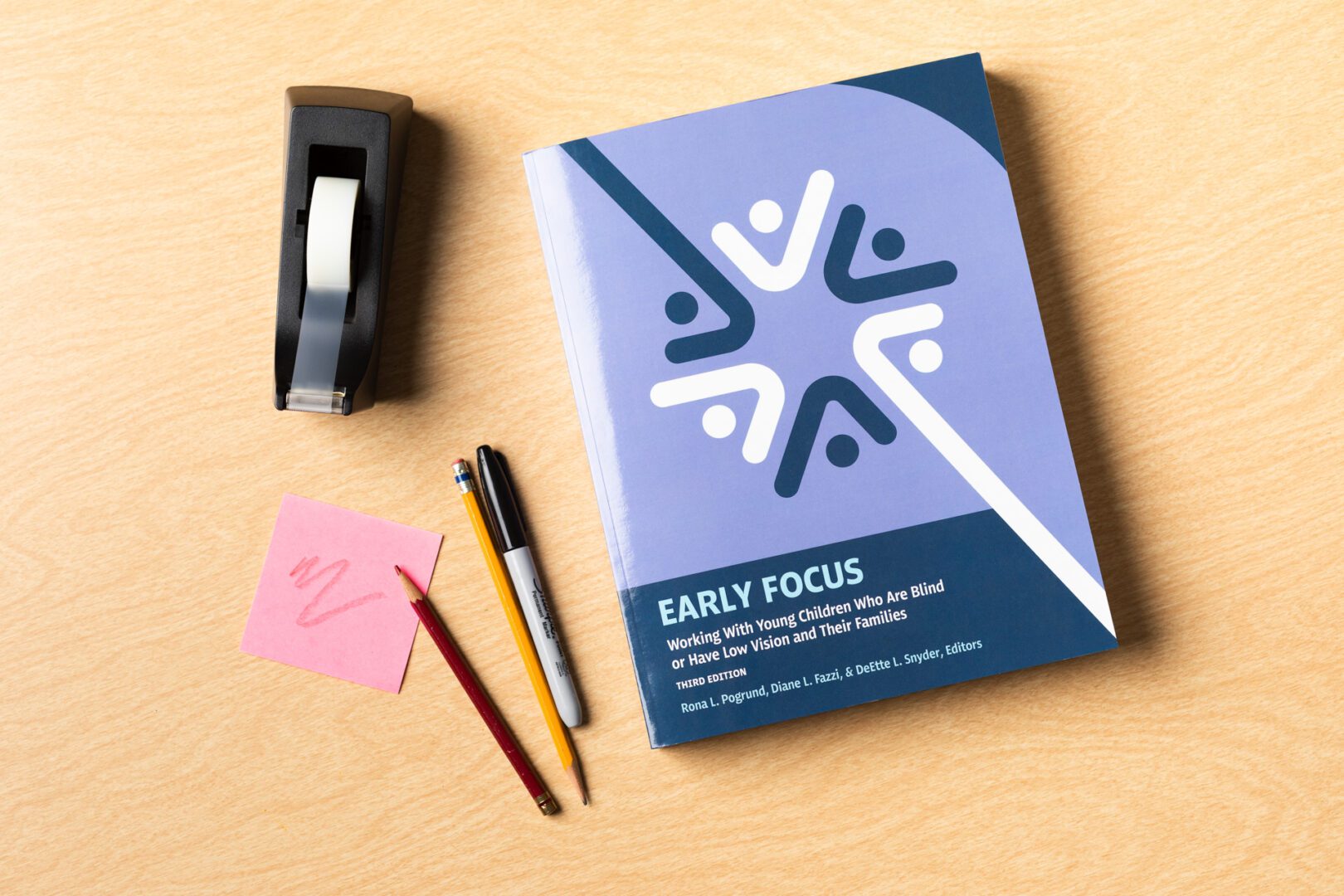
Families with a young child newly diagnosed with blindness or low vision invariably find themselves facing a series of questions without clear answers: Will our baby be OK? Is there anything we can do? Who can help us? That’s why early childhood interventionists are so important for families in this situation. Successful early intervention doesn’t only address the needs of the child; it also provides families with understanding, peace of mind, and a collaborative plan that ensures their child will thrive throughout the early parts of their lives. The new third edition of Early Focus: Working With Young Children Who Are Blind or Have Low Vision and Their Families offers a wealth of practical knowledge so the next generation of early childhood specialists and current practitioners can navigate these conversations with confidence, maximizing their impact on a child’s life.
This new edition of Early Focus builds on the established strengths and expertise that made the previous edition a cornerstone of the early interventionist’s library while addressing modern advances in research and practice. “Readers should be excited about the third edition of Early Focus because it is significantly updated in terms of content, terminology, and focus,” says co-editor Dr. Rona Pogrund, who reunited with Dr. Diane Fazzi from the second edition and invited Dr. DeEtte Snyder to collaborate on the 2026 text. Dr. Pogrund continues: “[The book] includes new, current information and a stronger focus on families and culturally relevant
Early Focus’s highlights include coaching strategies, real-life applications of tele-intervention and remote instruction in service provision, a discussion of the ubiquity (and usefulness) of technology, and a chapter specifically dedicated to strategies for assessing and learning to work with young children with neurological visual impairments (NVI). Dr. Pogrund notes that NVI is now the most frequently reported visual diagnosis in the United States for young children who have a visual impairment, so it is vital that professionals know how to assess and understand this population with accuracy and empathy. Throughout the book, readers will discover “Focus on Effectiveness” sidebars with easily digestible strategies that put the book’s expertise into practice in real-world situations.
Clearly, the editors have followed the evolution of early childhood intervention closely since Early Focus’s last incarnation. “Many things have changed in what we know about young children who are blind, DeafBlind, or have low vision, including [those] with additional disabilities and complex needs,” Dr. Pogrund says. “The approaches used when working with this young population have also shifted over the last several decades. [We] are passionate about ensuring that the best services for these young children are provided so they grow and develop to their potential and that the best support is given to their families.”
That passion is apparent throughout the book. In the third edition, new attention is given to transdisciplinary collaborative models that include the child’s family as a valuable part of the care team, the impact of technology and artificial intelligence on families and professionals, trauma-informed care and practices for providers and families with children with disabilities, and the inclusion of family members in a coaching approach—which, Dr. Pogrund notes, is more effective in empowering family members than having a specialist simply provide direct instruction to the child.
Dr. Snyder emphasizes the importance of these themes. “These often ignored or overlooked topics are what early childhood educators face as they support infants, toddlers, preschoolers, and their families. As a direct service professional in [the] field for over 30 years, it was important for me to include them in this book, and it was in the forefront of my mind from the very beginning of this process.”
Dr. Pogrund makes a point to stress, “[…] the importance of the family in whatever services are offered, as the family knows their child best. Even though developmental milestones are provided, each young child develops at their own pace and order, so professionals and families need to respect that for their children. Cultural sensitivity and relevance when interacting with families from different backgrounds should always be a priority. [Furthermore], there are often differences in development due to blindness or low vision, and knowing those expectations can help guide appropriate early intervention.”
Even though Early Focus is written primarily for inservice and preservice vision professionals providing early intervention, others intimately involved with the care and treatment of children who are blind or have low vision—including families, related service providers, medical professionals, early childhood teachers, and caregivers—will see themselves in its pages, finding actionable guidance for strengthening their practice among this particular population. “Teaching skills…that increase [children’s] age-appropriate independence, competence, and self-determination also help families see how their preconceived notions might not be accurate and how they can support their child in developing in these important areas,” says Dr. Pogrund.
On the most interpersonal level, Early Focus will enable early childhood interventionists to provide answers to a family’s questions with a confidence that reassures them every step of the way: Your baby is OK. There is so much you can do. I will help you. We can do this together.
Early Focus: Working With Young Children Who Are Blind or Have Low Vision and Their Families, Third Edition, is available now in the APH store.