
Gearing Up for the Abacus Bee Regionals
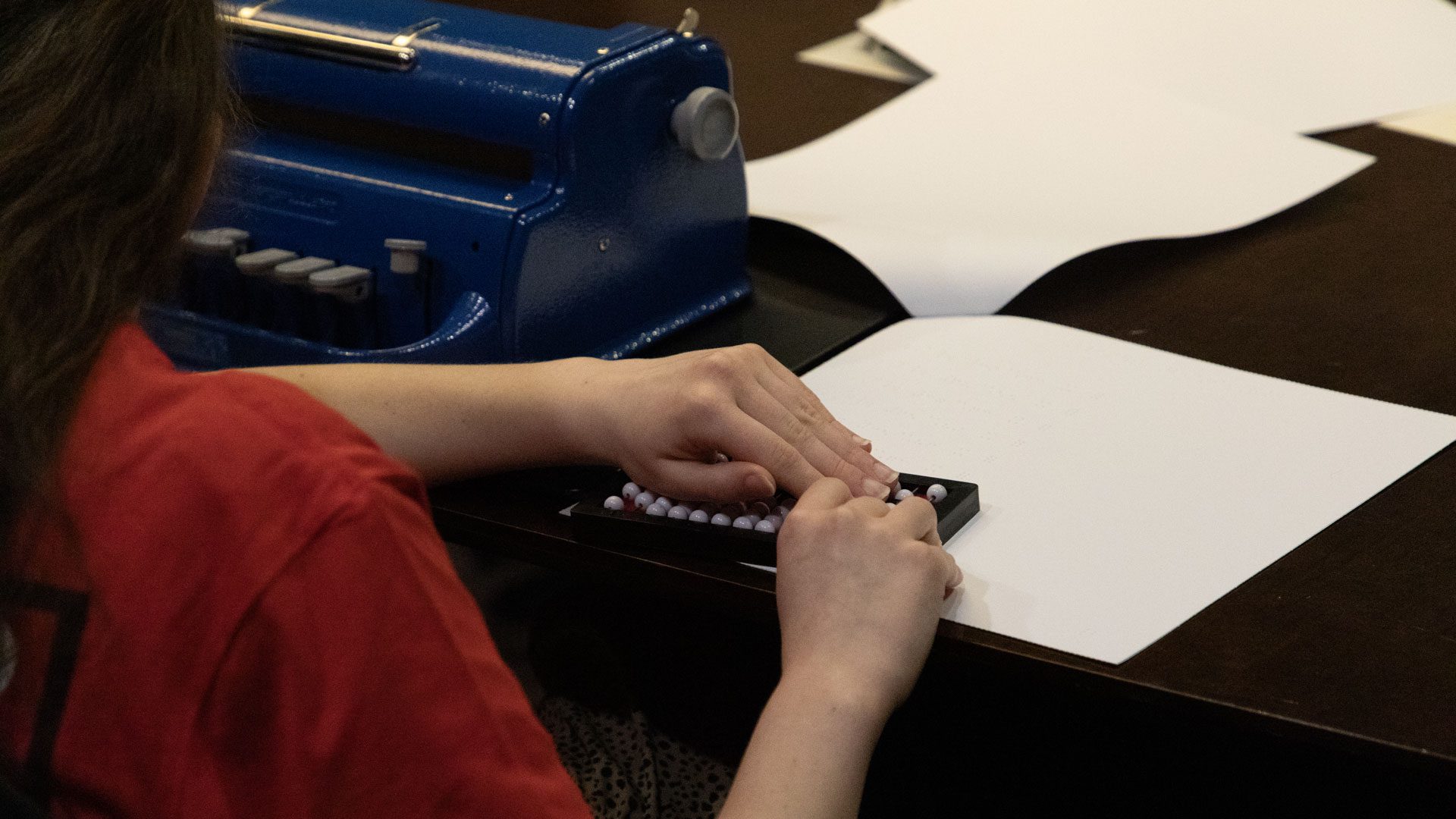
With this year’s Abacus Bee right around the corner, it’s important to be reminded of what makes this event so important for students, and their communities.
What are the Abacus Bee Regionals?
An annual STEM competition for students who are blind or low vision, the Abacus Bee competition uses the abacus tool to provide a competitive environment catered to the needs of the students. It allows formats like large print, braille, UEB math, or Nemeth code, so participants can use methods that fit their individual learning styles. Students are sorted into five groups by their knowledge of math skills on the abacus. This includes competition levels focused on simple addition and subtraction, up to more complex mathematical equations. “Students are met where they’re at, we celebrate their successes, and see them move up and improve their skills,” said APH’s Outreach Regional Specialist, Jennifer Brooks.
The Abacus Bee is divided into two rounds: the regional competition and the finals. Regional competitions will begin all over the US in September and will continue through November. This year, there are fifteen states participating in the Abacus Bee Regionals, and the top six participants from each of the five groups will move forward to the finals. The fifteen states hosting regional competitions are as follows: Arizona, Arkansas, Florida, Iowa, Kentucky, Louisiana, Maryland, Michigan, Missouri, New Jersey, North Carolina, Pennsylvania, South Carolina, Texas, Washington.
During the Regional Competitions, participants often begin with a welcome ceremony to help introduce students and their families to the other competitors. From there, students are led to their competition spaces and begin to complete their respective questions. During the competition, parents are often given the opportunity to not only meet other families, but also to listen to an expert speak on topics centering around blindness or low vision.
The day finishes with a celebration of students’ accomplishments − each student, regardless of level of placement, receives an award for their work that day. Students who place in the top three do get a distinctive medal, but all are given a medal for their participation. The awards serve as an opportunity to acknowledge a job well done, but to also remind the students that their place in the competition is already worth celebrating. “Math – just like life – isn’t always about taking the shortest path. Sometimes, you have to calculate different angles, divide and conquer, or count your steps to see the bigger picture. We encourage our students to believe in themselves, keep challenging themselves, and never stop being curious – because just like numbers, their potential is infinite,” said Brooks.
Student and Community Impact
While the skills practiced in, and leading up to, the competition are important – the greatest impact of the Abacus Bee goes further than foundational math skills. For many participants, this is their first experience in a competitive atmosphere designed for them. “It is so important for students to come together in a community that supports them specifically. Students mention they love this event because it is created for them. They don’t have to advocate because accessibility is built in,” said Brooks. “It is empowering for students to just enjoy themselves.”
For some students, this may also be their only opportunity during the year to spend the day with peers who are also blind or low vision. While some students are coming from schools for the blind, others are venturing from public schools and communities where they don’t know anyone else who uses the same tools as them − who read braille, or walk with a cane. Here, they are surrounded by peers who understand them, who read on the same devices, and who can create an atmosphere of belonging over their shared experiences. While students come to compete with math, they often leave with great friends.
Shared community extends past students and is life-changing for their parents and families as well. “For some parents, their child may be the only student who is blind or low vision in the area. Here, they see other parents with children like their own. They can engage in informal conversations about shared experiences, find community, and feel supported,” said Brooks. The competition also shows students that they belong in the world of STEM and creates a foundation for independent living early. “If we can build our students’ foundational skills and they feel more confident in them, they can move into advanced courses such as STEM careers, financial literacy, and more,” said Brooks. The Abacus Bee gives students confidence in their skills and provides them with a community of support that can last a lifetime.
The Abacus Bee would not be possible without coordinators, teachers, and instructors who are dedicated to this event and to keeping the abacus in classrooms throughout the rest of the year. “This program is funded by Simons Foundation International and administered by the Simons Foundation’s Science, Society & Culture division. We couldn’t succeed without their support!” said Brooks. To learn more about the Abacus Bee and its impact on students, check out this video!
Share this article.
Related articles
Product Updates and Upgrades
APH is always working to produce new technology and improve what already exists to ensure we are serving the APH community in the best way possible. After listening to the...
APH’s Abacus Bee Encourages STEM Success
A hand-held counting tool, the abacus uses lines of circular beads to represent numbers, moving the beads along rods or...

Summing Up Success: 2024 Abacus Bee Finals
APH’s Outreach Services team hosted close to 100 people in Louisville, KY on March 21-24 for a weekend of competition,...