To ensure your items arrive in time for the holidays, please place all orders using Free Matter shipping by Saturday, November 29 or by 12pm on Thursday, December 18 for UPS or USPS Priority shipping. School orders will be held after Monday, December 15 through the end of the year.
Close
National Coding Symposium
Join us on Tuesday, December 9th, 2025.
Register for the Coding Symposium
Check out the exciting Agenda and Presenters now!
Welcome to the APH National Coding Symposium and Day of Code, where innovation meets accessibility.
The APH National Coding Symposium will return for its fifth year with even more opportunities to engage students and all levels of coders. We will have in-person regional events throughout the year known as a “Day of Code” and will conclude with a virtual event on Tuesday, December 9th, 2025 to align with Computer Science Education Week.
If you missed it you can watch the recordings for all National Coding Symposiums on the APH YouTube channel playlist: National Coding Symposium – Supporting Coding Opportunities Throughout the Year
Watch the recording for the Day of Code Recap. Learn about the five “Day of Code” regional events that took place around the country in 2024. We discussed how these events gave students and teachers hands-on exploration and learning opportunities, as well as how to ignite interest for future events like them in your area.
If you are interested in learning more or hosting an event we can help. Fill out this interest form and we will reach out.
-
This symposium collaborates with educational partners nationwide to showcase engaging coding activities that inspire and empower. Designed to ignite the passion for coding among students from elementary to college levels, our symposium cultivates future leaders in programming and software development.
For educators, we provide invaluable ideas, resources, and support to effortlessly integrate coding concepts into their teaching curriculum. Accessible coding activities can be replicated before, after, or during our symposium by accessing our resources page. Get ready to embark on a journey where coding becomes not just a skill, but a gateway to boundless opportunities.
-
Students in grades K-College will benefit from attending the Symposium. Different programming codes and products will be discussed as well as career opportunities in programming and related careers.
Teachers of students with visual impairments and assistive technology specialists who would like to integrate coding into their lesson plans and curricula will learn about activities, resources, tips, and pathways to overcoming inaccessible learning platforms and confusing coding lessons. ACVREP credits will be available for the virtual event in December.
Parents will discover information about how to support and encourage a child with an interest in coding.
-
Coding is fun, challenging, and accessible across platforms and skill levels. Join us for a dynamic blend of inspirational speakers, thought-provoking panel discussions, illuminating presentations, and hands-on demonstration sessions. You can read about previous coding symposiums from a non-coding perspective in our blog, Accessible Coding: A Reflection From a Non-Techie.
National Coding Symposium 2025 Agenda
12/09/2025 12:00 – 4:30 EST
12:00-12:10 EST – Welcome
12:10-1:10 EST – Title: JetBrains IDEs: Smarter tools for bigger code
Presented by Michael Whapples
Session Description:
As code projects grow, tools are needed to work effectively with these larger code bases. In this presentation the JetBrains IDEs will be introduced as an accessible development environment. The presentation will walk through creating a project, editing code, reviewing errors and warnings, refactoring tools and running the code. These tasks will be demonstrated with a screen reader, with accessibility settings and keyboard shortcuts being discussed.
*** Target audience and prerequisite knowledge The target audience is those who either have learnt the basics of programming and need tools as they start working on larger multi-file code bases, or those supporting or teaching such people. Whilst coding will be demonstrated, it is not required that audience members know the programming language used in this presentation.
Learning objectives
- Discover the JetBrains IDE collection for intermediate to advanced coding.
- Explore accessibility options of the IDEs.
- Identify the application of an IDE in preparation for Higher Ed.
- Understand the basics of working with a project in a JetBrains IDE.
1:10-1:40 EST – Title: Beyond the Code: Fostering Literacy, Social Skills, and Independence with KaiBot Robotics
Presented by Ben Davisson
Session Description:
This presentation focuses on the holistic educational impact of KaiBots, framing them as a multi-tool for developing a wide range of academic and life skills. Not just coding.
Traditional coding tools often create a “digital divide” for students with visual impairments and deafblindness. This presentation will demonstrate how the KaiBot, a unique tactile and multi-sensory robot, serves as a powerful, cross-curricular teaching tool. This session will explore how KaiBot’s braille and audio-enabled design directly enhances social-emotional learning, braille and print literacy,
Orientation and mobility (O&M), and key concepts in math and science.
Attendees will learn practical strategies for using this single device to address diverse learning goals while fostering confidence, collaboration, and independence in students who are blind, visually impaired, or deafblind. The session will feature hands-
On demonstrations and real-world examples of how KaiBots can be used to enrich the Expanded Core Curriculum.
Learning Objectives:
By the end of this presentation, attendees will be able to:
- Identify how KaiBots support the development of braille and print literacy through a hands-on, interactive format.
- Explain how using KaiBots and their tactile grid system can teach fund a mental orientation and mobility concepts.
- Describe at least three ways KaiBots promote social skills and collaborative learning in inclusive settings.
- Implement activities that use KaiBots to teach core concepts in math and science, such as sequencing, variables, and physical forces.
1:40-2:00 EST – Title: Quick look at CJ Threads
Presented by Liam Erven
Session Description:
Watch live demo of the new way Code Jumper can start to bridge coding concepts to learning Python code.
2:00-2:10 – Short Break
2:20-3:20 EST – Title: LaTeX in HTML Teaching Session
Presented by Dr. Stacy M. Branham
Session Description:
This presentation introduces a hands-on approach to integrating LaTeX into HTML to support computational thinking and mathematical accessibility in computer science education. Beginning with a brief overview of research on math accessibility and its role in easing the transition to higher education, the session connects LaTeX’s structured syntax to core computational thinking concepts such as nesting, pattern matching, and semantic encoding. Participants will engage in a live demonstration of LaTeX-to-MathML conversion and practice embedding LaTeX in HTML using MathJax. Through interactive coding exercises and comparative examples, the session highlights how accessible math representation can enhance learning outcomes and inclusion in CS classrooms. The presentation concludes with a discussion on usability and feedback, inviting educators and developers to reflect on practical applications in their own teaching environments.
Learning Objectives:.
By the end of this session, participants will be able to:
- Understand the connection between LaTeX and computational thinking
- Write basic LaTeX expressions for mathematical notation
- Use the LaTeX to HTML conversion tool effectively
- Recognize how mathematical accessibility impacts CS education
3:20-4:20 EST – Title: Succeeding in Coding in Higher Education
Presented by Deborah Armstrong
Session Description:
Join us for an interview with Debee a blind programmer. She will speak on how blind post-secondary students can convince professors that this field is right for them. At the college where she works, so many blind students have failed their first programming course because the curriculum was not accessible and the professors were not convinced the student could succeed. As someone who succeeded by being self-taught and proactive, Debee often works hard to teach both her students and their instructors how to go about learning to code. She would like to share her experiences and tips.
4:20-4:30 EST – Closing
-
Michael Whapples
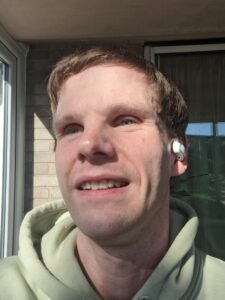
Michael currently works for APH as a senior software engineer. Since starting with APH in 2014, Michael has been working on the BrailleBlaster software amongst other projects. Michael studied a BSC in Physics with Theoretical Physics at University of Nottingham, graduating in 2007. Later they studied at the Open University, obtaining their Post Graduate Diploma in Computing for Commerce and Industry in 2012.
Although Michael learnt some computer programming at school, it wasn’t until 2005 when they discovered their interest in software development after creating a tool to assist them in converting university lecture notes written in LaTeX to Braille. As a blind person Michael has encountered many cases where the correct software tool has made a significant positive difference and feels that by being able to create software this enables people to create tools to meet their exact requirements.
When not creating software, Michael can be found doing a number of different activities such as target shooting, tandem cycling, yoga or yacht sailing.
Ben Davisson
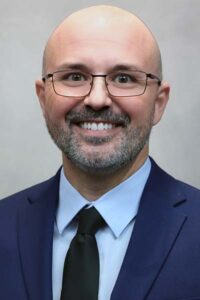
My name is Ben, and I serve as the Statewide Visually Impaired and Deafblind Specialist at ESC Region 11. My work is driven by a profound and constant passion for assistive technology (AT) and the belief that full educational and social inclusion is an absolute must for students who are blind, visually impaired, and deafblind. I view every integration challenge as an opportunity to innovate, ensuring that I can incorporate technology into students’ daily lives so they can participate in all activities alongside their sighted peers. I thrive on teaching, training, and always staying ahead of the curve, guided by a simple truth: challenges are simply how I grow and learn. I look forward to sharing practical, structured insights on how we can all embrace this forward-thinking view of AT.
Liam Erven

Liam Erven is a Technical Quality Assurance Analyst at APH. He previously worked as a software engineer for a local non-profit and as an assistive technology specialist, teaching computer skills to adults. In his spare time, he creates accessible games for blind and visually impaired players.
Deborah Armstrong
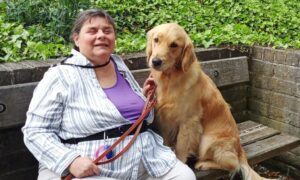
I work at a community college as its alternate media specialist, but before that, I was a computer programmer for thirty years, I still write code as a hobby.
I wrote the fourth screen reader for the IBM PC which was called VideoVoice, back in 1983. I have always been blind.
I am an active member of the ACB affiliate Blind Information Technology Specialists and was its education chair. I assisted and wrote some of the curriculum for the three courses we taught last year in Python, Microsoft Office and HTML/Wordpress. I currently am managing and teaching part of an NVDA course we will offer in October; all this work for ACB is of course volunteering.
Isabela Figueira
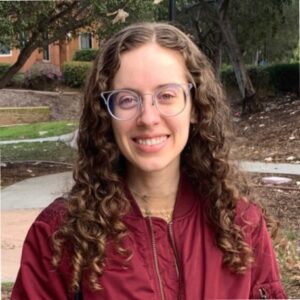
Isabela Figueira is an Informatics PhD student at the University of California, Irvine, advised by Dr. Stacy Branham. Isabela’s research investigates accessibility of STEM education for blind and low vision students going to college. In particular, she focuses on education technology and works with community partners to design new technologies to support disabled novice STEM students. Isabela previously earned a B.S. in Computer Science and Engineering from Santa Clara University and an M.S. in Computer Science from UC Irvine.
Dr. Stacy Branham
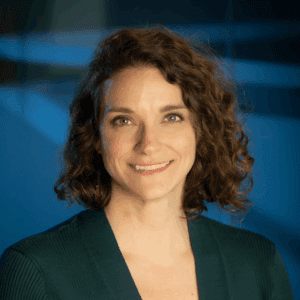
Stacy Branham is an Associate Professor of Informatics at the University of California, Irvine. Branham’s research investigates how technologies operate in social settings where one or more people is disabled. In addition to intellectual contributions to the fields of Accessible Computing and Human Computer Interaction, her work provides practical outcomes via partnerships with disability advocacy organizations and companies, including Toyota and Google. In 2021, she received the NSF CAREER Award and was named one of the “Brilliant 10” rising STEM researchers by Popular Science. She earned her Ph.D. in 2014 and her B.S. in 2007, both from Virginia Tech’s Department of Computer Science. www.stacybranham.com
-
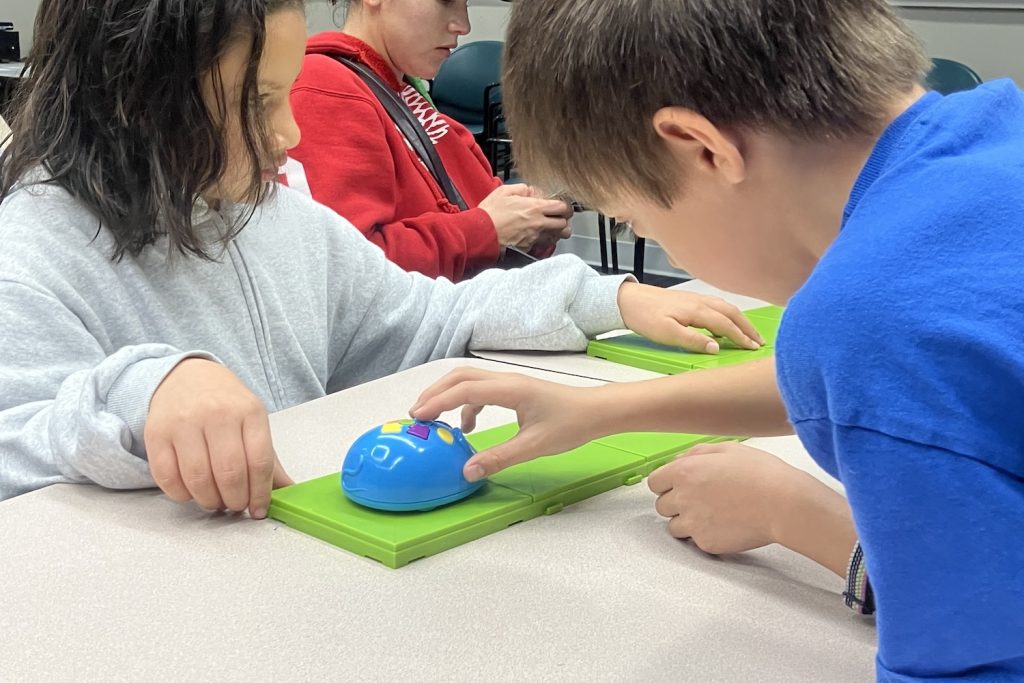
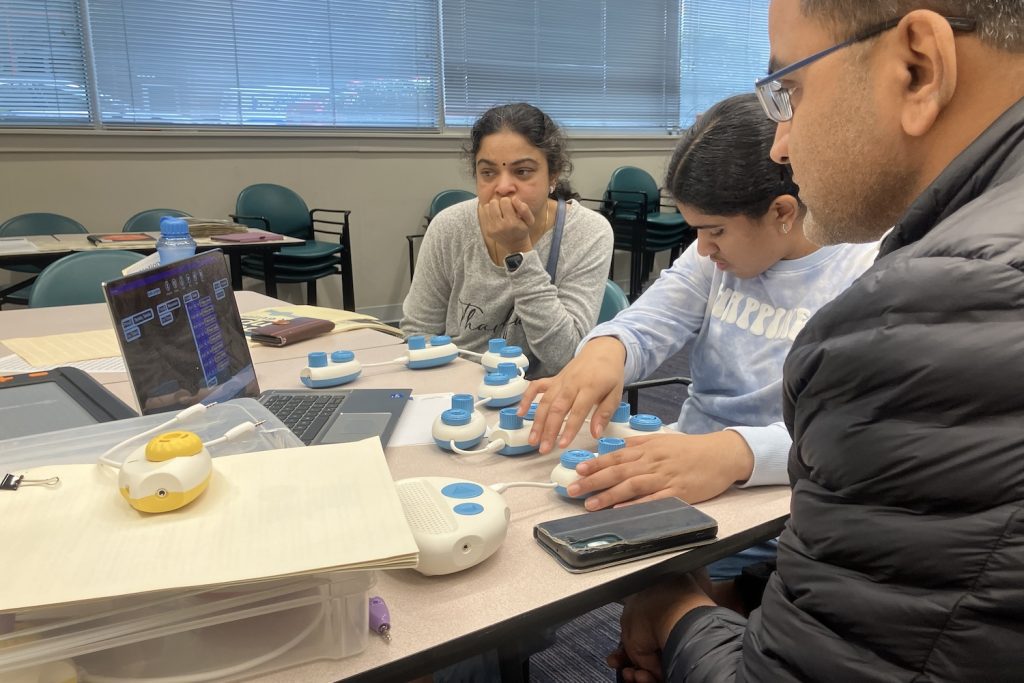
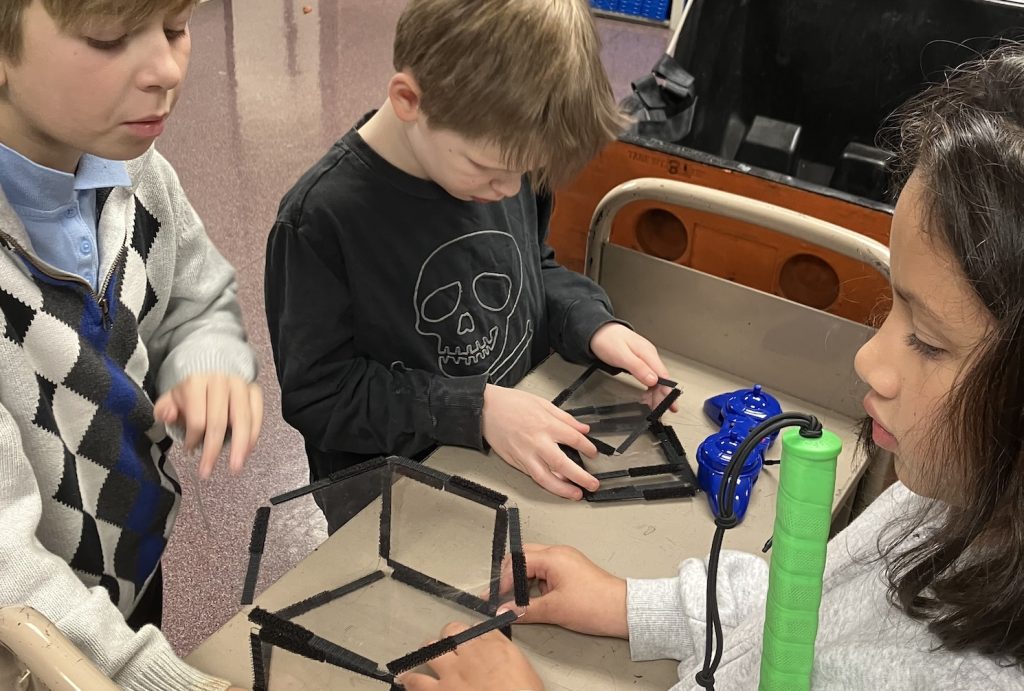
The goal of the Coding Symposium is to build connections between students, teachers, and professionals in computer science. To achieve this goal the Day of Code emerged. This concept began at the California School for the Blind and now stretches across the country. A Day of Code is an in-person regional event that gives students and teachers hands-on explorational learning opportunities.
The “Day of Code” as part of the APH National Coding Symposium:
When: 9/1/25 to 12/31/25
Where: In-person locations around the U.S.
Who: Students who are blind or have low vision, and various types of teachers (Gen Ed, ATS, TVIs, Coding clubs etc.)The focus of each Day of Code may have a unique aspect. Whether it’s exploring the intricacies of Monarch, delving into the capabilities of Quorum, navigating with Screen readers, or building a strong foundation in coding, each Day of Code will be fun and educational.
-
-
- Hive Professional Learning Community – Professional Communities provides a portal to curated webinars, external courses, and provision of other professional resources with the purpose of meeting the needs of people who offer assistance to individuals who are blind or have low vision.
- Gen-Cyber
- Python
- Quorum
- Careers Paths in Coding
- Bridges
- Join the discussion board
-
Contact APH Outreach at outreach@aph.org for more information.