
A Museum Intern’s Perspective
When I entered this internship, I knew I would be working on a complete de-installation of the museum and the packing and storing of the artifacts in long-term storage. As I have only worked with the collection of an art museum, this proved to be a lesson in the differences between art and artifacts and between an art museum and a history museum. There have also proven to be many similarities. I am, by no means, making the claim that the new Dot Experience at APH will not have art nor that an art museum such as the Speed Museum does not have artifacts in their collection. Art museums display artifacts and art side by side and the Dot Experience at APH will be no different.
To explain both terms, an artifact is defined as a simple object (such as a tool or ornament) showing human workmanship or modification as distinguished from a natural object and something characteristic of or resulting from a particular human institution, period, trend, or individual.
Art is defined as the conscious use of skill and creative imagination, especially in the production of aesthetic (concerned with the beauty or the appreciation of beauty) objects and skill acquired by experience, study, or observation. In the human workmanship in the artifact definition, the definition of art can be referenced by the skill of the craftsman and the aesthetic principles used in the creation of the piece. Just because it is a tool does not mean that it cannot also be beautiful. We see this in pieces found in the American Printing House for the Blind archives and in the Helen Keller archive.
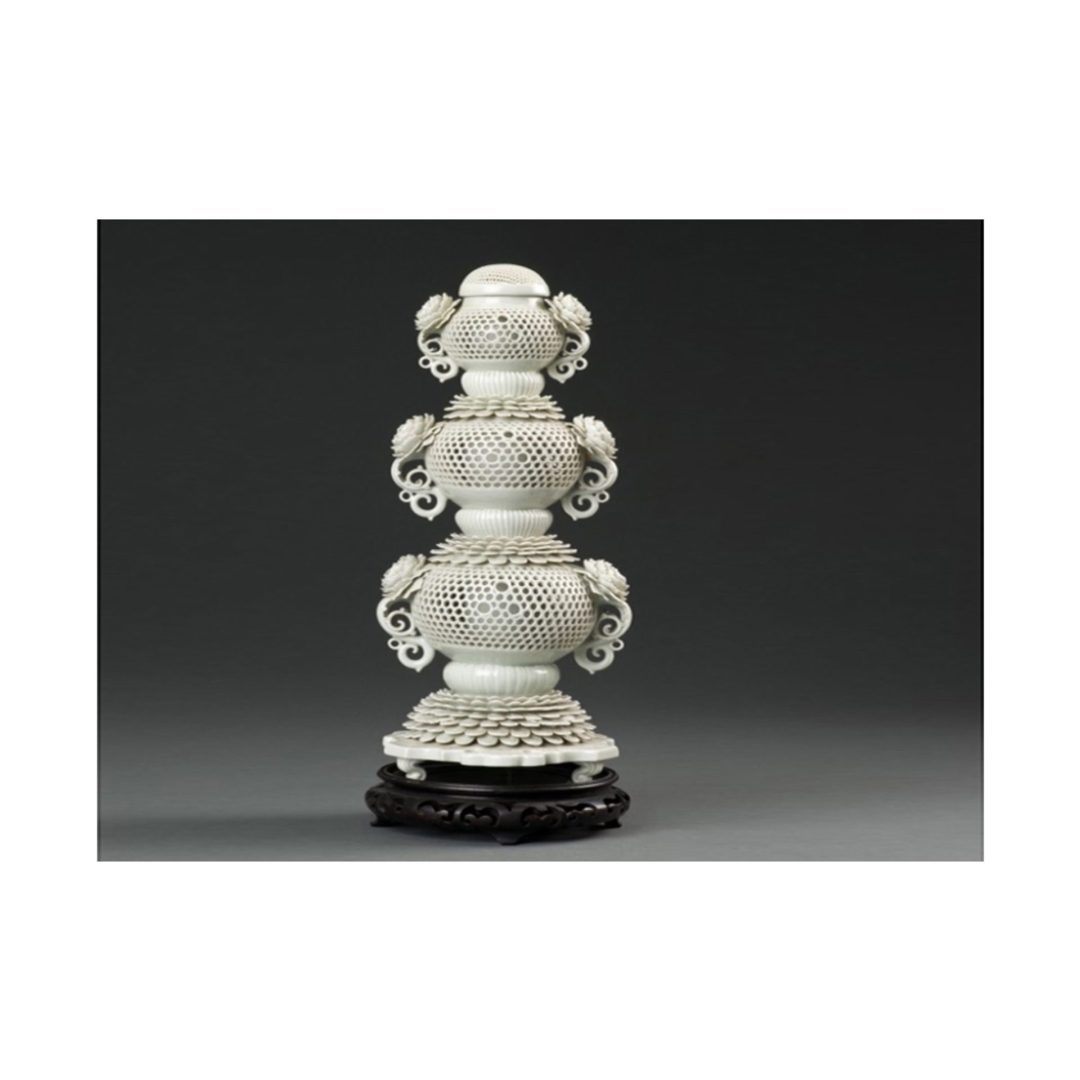
For example, this incense burner given to Helen Keller is a combination of beautiful form and function. It is created from porcelain and described as a white graduated triple bowled filigree incense burner with leaves and peony flowers. It is a piece of art in the definition of the conscious use of skill and creative imagination in the production of aesthetic objects. The incense burner is also considered an artifact in because it is from a particular human institution, period, trend, or individual. It is an object of remembrance, an object that shows the type of porcelain created in Japan at the time. It is thought that Helen was presented with the incense burner during her 1948 tour of Japan that she conducted with Polly Thompson as a representative of the American Foundation for the Overseas Blind.
In my weeks here at APH, I have discovered that the boundaries between art and artifacts are fluid since a single piece can be termed both a work of art and an artifact that tells us the characteristics of a time in the past. A clear distinction between art museums and history museums cannot be determined since both give visitors opportunities to see both art and artifacts together in one space.
Share this article.
Related articles

Creating The Dot Experience: Prototyping with Scott Spaulding
The Dot Experience is a unique, fully inclusive museum experience. Images, sounds, artifacts, and exhibits have each been carefully constructed to ensure every...
Bringing Helen Keller’s Water Pump to Life at The Dot Experience
What was it like for six-year-old Helen Keller to discover language? Those seconds of wonder, understanding, and awe are frozen...
KSB and The Dot Experience
Nestled beside The Dot Experience, the Kentucky School for the Blind (KSB) has been woven into the Louisville community since...