To ensure your items arrive in time for the holidays, please place all orders using Free Matter shipping by Saturday, November 29 or by 12pm on Thursday, December 18 for UPS or USPS Priority shipping. School orders will be held after Monday, December 15 through the end of the year.
Close
Blindness History Basics: The First Publication of the Braille Code
January 21, 2025
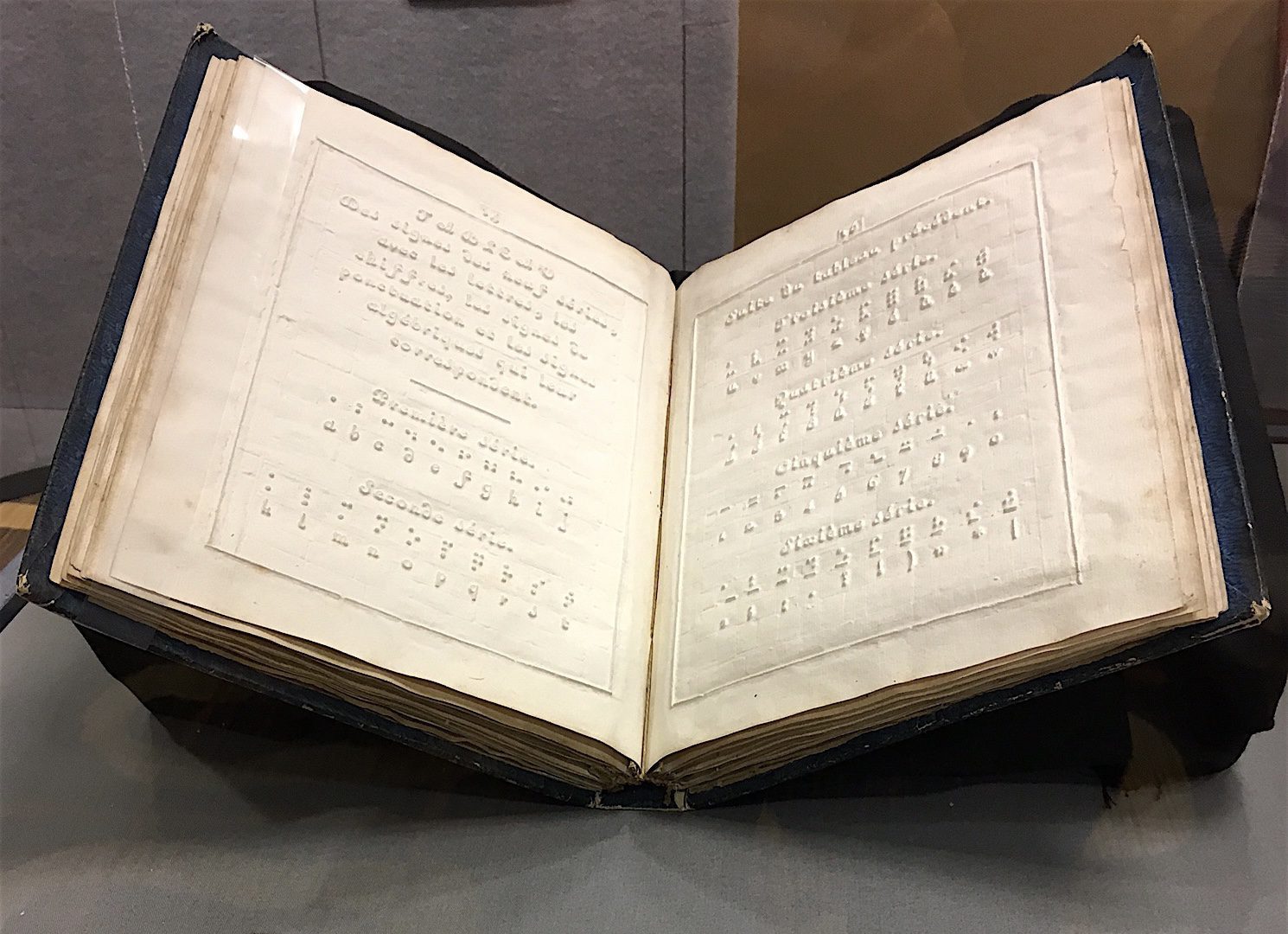
Louis Braille’s code lives on today as individuals who are blind and have low vision use his system to read and write for school, work, and leisure. The Dot Experience, APH’s new attraction, celebrates Louis’s accomplishment as it will proudly display his book, which outlines the basics of braille, for all to enjoy. One of only six copies in the world, this rare tome is beautiful to behold.
About the Book
Procédé pour écrire les paroles, la musique et le plain-chant au moyen de point, or Method for Writing Words, Music, and Plainsong in Dots, by Louis Braille was published in 1829 by L’Institution Royale Des Jeunes Aveugles (The National Institute for Young Blind People) in Paris, France. Louis’s book was the first explanation of the system he had created to help individuals who are blind or have low vision read and write. The young inventor started developing the code at age twelve and, aided by the school he attended and later taught at, released this work when he was twenty. Printed in one volume of raised type, the text outlines the braille music and literary code along with instructions for writing it.
How the Book Was Made
To produce Louis’s book, every page had to be assembled using individual metal types arranged within a rectangular frame known as a chase. The chase was secured into the jaws of a screwtype printing press. Printers dampened the paper before placing it onto a moving table, ensuring the thick sheets, which required a strong and durable impression, performed better in the press. After the table slid into the press, the printshop workers closed it using a long lever for the necessary mechanical advantage. Once opened, they had a single copy of page one. When enough copies were printed, the type for that page was dismantled entirely, and the process began again to set the type for page two.
Acquiring the Book for APH
In the fall of 2015, one of the few remaining copies of the Procédé became available from a New York bookseller. APH launched a successful fundraising campaign and added Louis’s text to its collection. On February 11, 2016, APH hosted an unveiling ceremony to recognize donors and highlight the importance of this influential book.
Former Museum Director, Mike Hudson, noted that the text was in great condition, with a “bright” blue marbled paper cover. He said, “The [thirty-seven] pages are fascinating, illustrating the experimental nature of early embossing for blind readers. The wooden blocks used to set up the page clearly outlined where they were pressed onto wet paper. But the true wonder of the book is found in the elegance of the code, Louis Braille’s original alphabet. It is the same code still found wherever the Roman alphabet is used and has been adapted for many languages—even those such as Chinese, that are character-based rather than alphabet based.”
Displaying the Book
After receiving the Procédé, APH created a small exhibit for it in the early education section of the old museum. The display case held Louis’s text in a clear acrylic book cradle, which allowed visitors to view the open book as it rested at an angle to preserve its binding.
When The Dot Experience opens in 2026, Louis’s book will be on display in our Decoding Braille exhibit next to a life-cast figure of the young inventor. The book will be in a case, with a tactile representation on a ledge below for visitors to touch. Both versions will depict the same page of the text.
Learn more about historical events and artifacts by reading our Blindness History Basics blog series, and follow The Dot Experience on Facebook to hear the latest news about the attraction.
Share this article.
Related articles
Bringing Helen Keller’s Water Pump to Life at The Dot Experience
What was it like for six-year-old Helen Keller to discover language? Those seconds of wonder, understanding, and awe are frozen...
KSB and The Dot Experience
Nestled beside The Dot Experience, the Kentucky School for the Blind (KSB) has been woven into the Louisville community since...
Finding Helen Keller’s Water Pump: An Ongoing Investigation
As APH continues to design exhibits for The Dot Experience, we are working to create the most accurate representations as...