
Bringing Dynamic Braille Files to Life with eBraille and Duxbury
The creation and refinement of eBraille is a project over three years in the making. It has involved community input, intentional development, and the support of over 60 organizations. Each organization has given compliments, critiques, and their valued input to help shape the future of digital braille files with the blind or low vision community at the forefront of their mind. One partner that is championing eBraille in the transcription field, challenging new ideas, and encouraging digital braille innovation is Duxbury Systems.
Duxbury is the international leader in braille production and transcription. Their dedication to the needs of the blind or low vision community and the production of braille materials has kept them in the forefront of braille development since the 1970s. Duxbury supports over 180 languages and created the widely used braille file type BRF. The American Printing House (APH) is grateful to have their partnership moving toward the future of digital braille. “BRF was perfect for the needs of the braille community for so long,” said APH’s Technical Product Innovations Manager, Willow Free. “The file size is small, easy to open, and met the needs of simpler technology like embossers. But the needs of braille are changing. That’s where eBraille is coming in.”
Throughout the development of eBraille, Duxbury employees have believed deeply in the new file type. Peter Sullivan, the current Vice President at Duxbury and grandson of the founder, offered his support to the cause because of the need he saw from the community. David Holladay, and his wife Caryn Navy, were supporters of APH’s eBraille design from the beginning. David attended many meetings before his passing, even from the hospital, working diligently to encourage the collaboration between APH and Duxbury as the new file type began to take shape. “Duxbury has really been spearheading the charge for eBraille. This new file type would not be successful without them,” said Free.
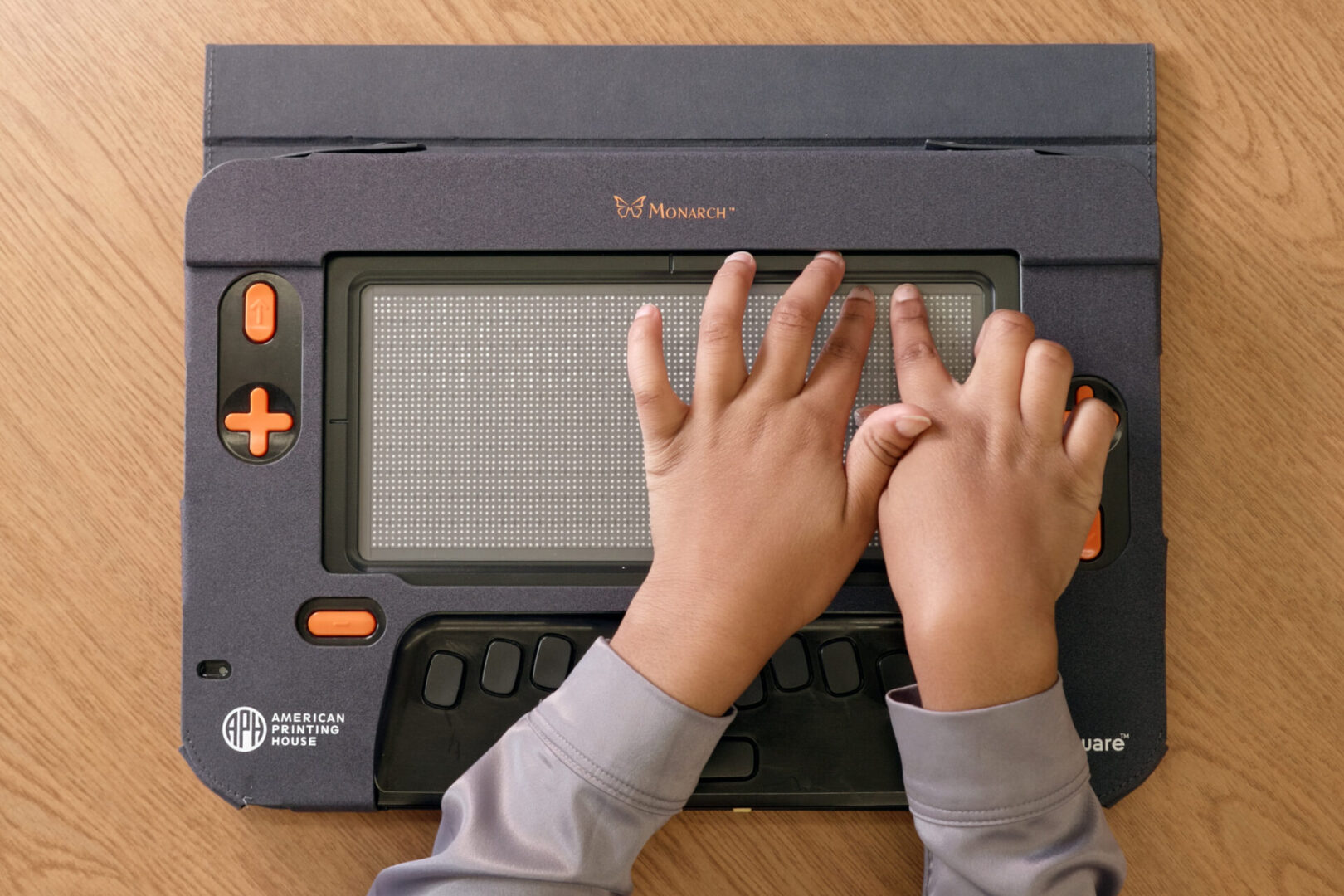
eBraille is the next step in the evolution of braille. The flexible file type is no longer limited by fixed page sizes and now intelligently adapts itself to your display. eBraille understands structure so your headings, paragraphs, and lists are clearly defined which makes navigation effortless. “There’s not enough braille as it is, we don’t want our file types to be separated by device. eBraille is for everyone,” said Free. The use of the eBraille file allows for advanced navigation, inclusion of tactile graphics, lines that adjust automatically, and an overall smoother experience for the braille user. It will be available on the Monarch, BrailleBlaster, ePUB readers, and in your browser with a screen reader.
Creating native eBraille files is now possible through the industry’s most popular braille transcription tool, Duxbury. To learn more about how to make the most of eBraille, join us for a webinar with Willow Free on Thursday, September 17 at 1pm ET. Register here for New Horizons: eBraille with Duxbury.