
The Dot Experience Celebrates Helen Keller
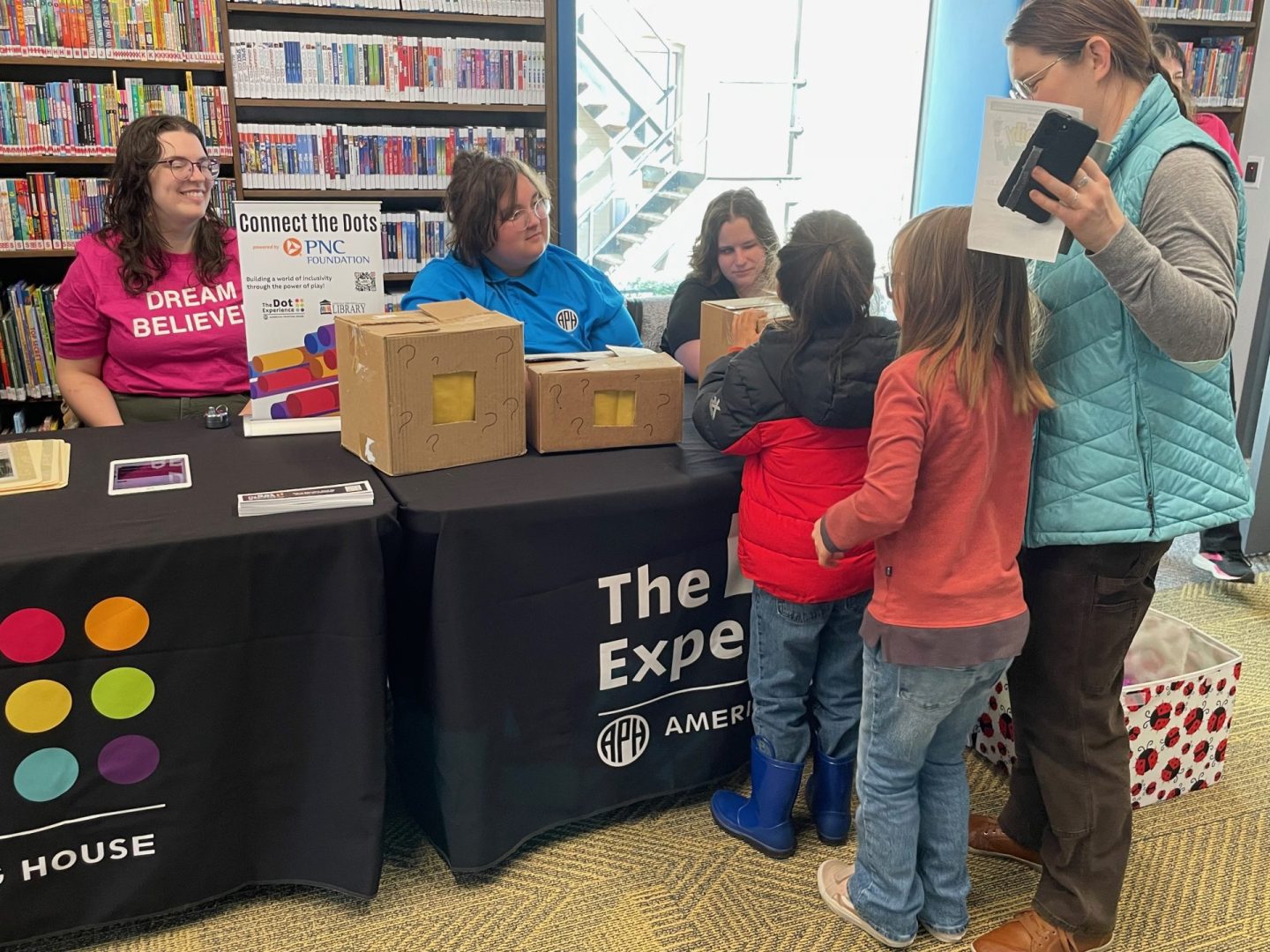
The Dot Experience team celebrated one of the world’s biggest change makers—Helen Keller during a recent Connect the Dots event, held as part of Parkland Library Family Fun Day, at the Parkland LFPL on Saturday, March 1st.
Event Overview
Activities included exciting hands-on exploration of Helen Keller’s legacy as a trailblazer in the DeafBlind world. Participants got to have engaging discussions, check out some fun mystery boxes and enjoyed a rare opportunity to examine authentic and replica artifacts from the AFB Helen Keller Archive while learning how Keller’s life shaped a more inclusive and accessible world.
During the event, visitors journeyed through interactive stations bringing Helen Keller’s life and experiences to life. At the first station, attendees engaged with the world as Helen did — through touch. Placing their hands inside mystery boxes, they explored a variety of textures and shapes, relying solely on their sense of touch to identify and describe hidden objects. This activity encouraged sensory awareness and highlighted the importance of tactile learning, just as it was for Helen!
Program Content and Activities
AFB Helen Keller Archivist, Justin Gardner, offered everyone a chance to explore copies of Helen Keller’s personal documents — letters, photos, and more — to uncover the causes and individuals she championed throughout her career. Guests wore gloves, used magnifying glasses, and learned other archival best practices as they reviewed these items with the Jupiter, APH’s portable magnifier, gaining firsthand experience with assistive technology. In addition, artifact prototypes were on display, offering a deeper look into the tangible history of Helen Keller’s legacy.
Next, attendees tested their knowledge with questions that challenged players to think critically about Helen Keller and the work she did for those who were blind or low vision. Players slammed their hand down on the “true” or “false” automated buttons, engaging in a fast-paced, interactive experience. The volunteers not only revealed whether they passed, but also provided additional context and insights, deepening participants’ understanding of Helen’s lasting impact on history.
Top Takeaway
As humans, we grow closer to the past and to each other by experiencing the world through different perspectives. Program visitors gained an understanding of how Helen interacted with her surroundings and worked to make the world a better place for everyone. They also developed sensory awareness, critical thinking, and archival research skills, as well as expanding their knowledge about alternative communication methods and accessibility. Through Helen Keller’s legacy, we hope participants will be motivated to work toward a more equitable future for all.
Share this article.
Related articles
Blind Roosevelt Graves and the First Recorded Rock & Roll
Did you know that the first recorded rock n’ roll is attributed to a blind musician? The musical group, Blind...
Blindness History Basics: History of Braille Writers
When fifteen-year-old Louis Braille presented his tactile system of raised dots in 1824, he...
Blindness History Basics: The War of the Dots
Today, it is typical for individuals who are sighted to read print and for people who are blind or low...