
Building Connections with Monarch and Visual Outputs
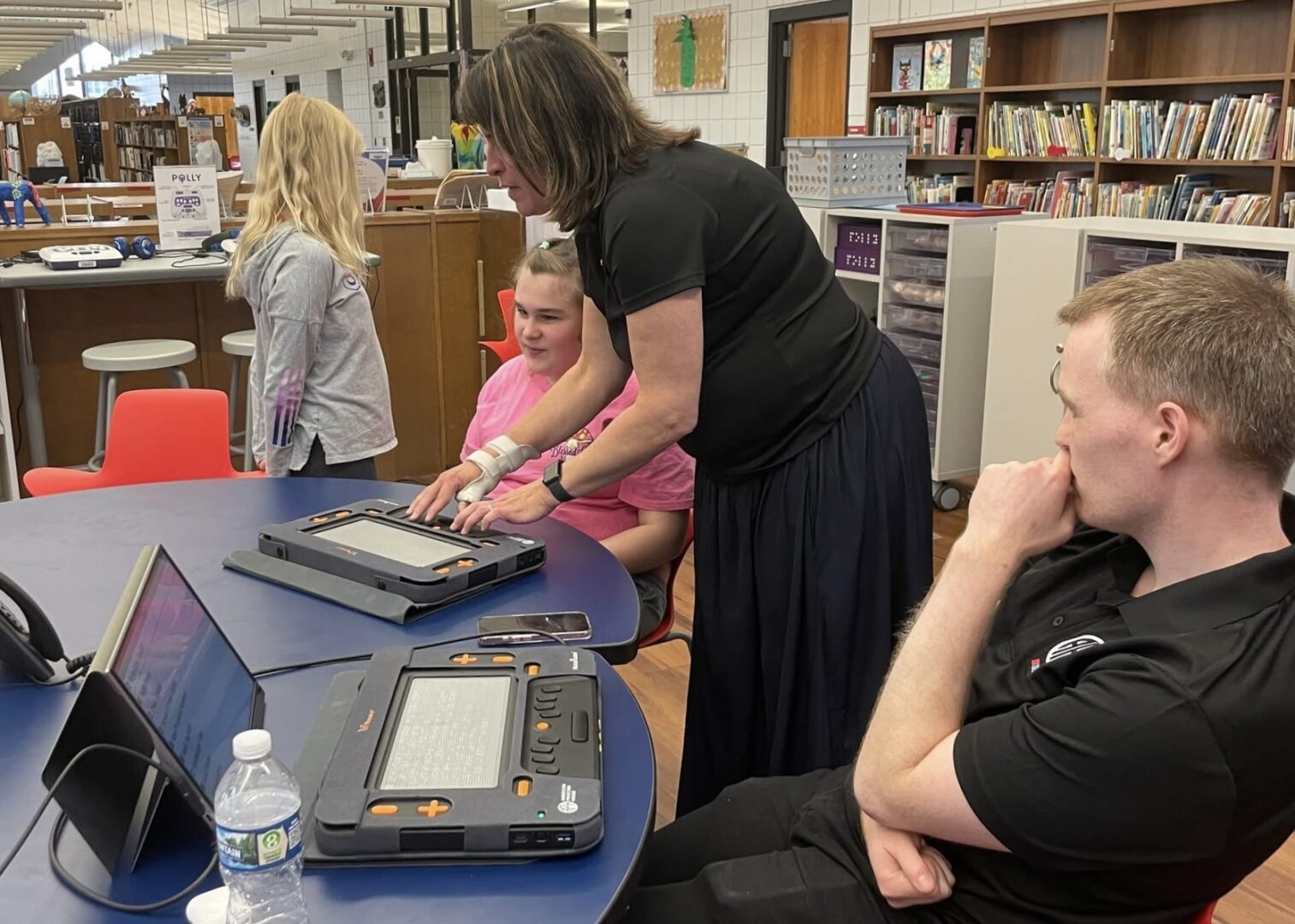
The Monarch has created unprecedented levels of access for blind or low vision users in homes, classrooms, and individual workplaces. The extensive collection of tactile graphics in the Tactile Graphics Image Library, paired with the revolutionary 10-line braille display, has allowed users to push the bounds of what has previously been capable of braille displays. Monarch makes reading, writing, document editing and formatting, test taking, and viewing tactile images simpler and more effective − all in a portable and user-friendly device. But, for some students, peers, and family members, the biggest difference has been the capability to view content on Monarch’s braille display and an external screen simultaneously.
With the use of an HDMI cable, Monarch can be connected to any HDMI compatible device, such as computer screens, TVs, and projectors. The connected screen will show a print version of exactly what the Monarch user sees on their own display. For some students who are blind or low vision, they rely on TVIs and instructors who are not able to review their work and progress daily. Even students who attend Schools for the Blind often come home to parents who can’t read braille and would have a hard time assisting students in homework on braille display devices. Connecting Monarch to a visual display allows anyone in the student’s life to monitor and help as they complete their work without having to understand or read braille. During the Monarch Student Pilot Project, teachers have noted where students have grown closer to their families thanks to the ability to collaborate on homework. Parents have been grateful for the ability to connect with their students in an area where they previously weren’t able to.
For low vision students, access to a Monarch alongside magnifying devices like Jupiter may also provide new opportunities for developing braille literacy. This connection can aid in the process of braille learning as well as to help ease the transition between a magnification tool and a tactile tool. Using the HDMI connection, students can use existing devices, like Jupiter, as another kind of visual output with the Monarch. Using assistive technology in tandem with Monarch creates a whole new realm of possibilities for learning and allows students to push the bounds of what Monarch is capable of.
Monarch’s connection to any visual output also increases the ease of collaboration between students who are blind or low vision and their peers. In a classroom full of students with varying visual ability, connecting the Monarch with other devices catered to student’s needs allows for any combination of students to comfortably work together on projects, games, or collaborative reading. Monarch can be connected to Jupiter, so a student who is a braille reader could work alongside a student that uses a magnifying tool. Connecting Monarch to a TV could provide students the opportunity to play games loaded onto the Monarch, like Chess, alongside their friends and family.
While Monarch serves as an extraordinary way to increase access and encourage individual learning, it cannot be underestimated as a tool for connection between all types of users.
Share this article.
Related articles
Monarch is Making a Difference: Creating New Holiday Traditions
A Pre-Employment Transition Skills Trainer with Advocates Searching for Independence (ASI), LLC, Daniel Martinez received his Monarch through the Monarch...
One Year Later: Celebrating and Reflecting on the Monarch
One year ago, Monarch took flight changing the lives of teachers, students, and families across the world. With over 1,000...
Making Your Own Accessible Materials
As schools prepare to welcome students back for another year, teachers, parents, and students alike wonder what kind of accessible...