
Orientation, Mobility, and Innovation: Connect the Dots to The Dot Experience
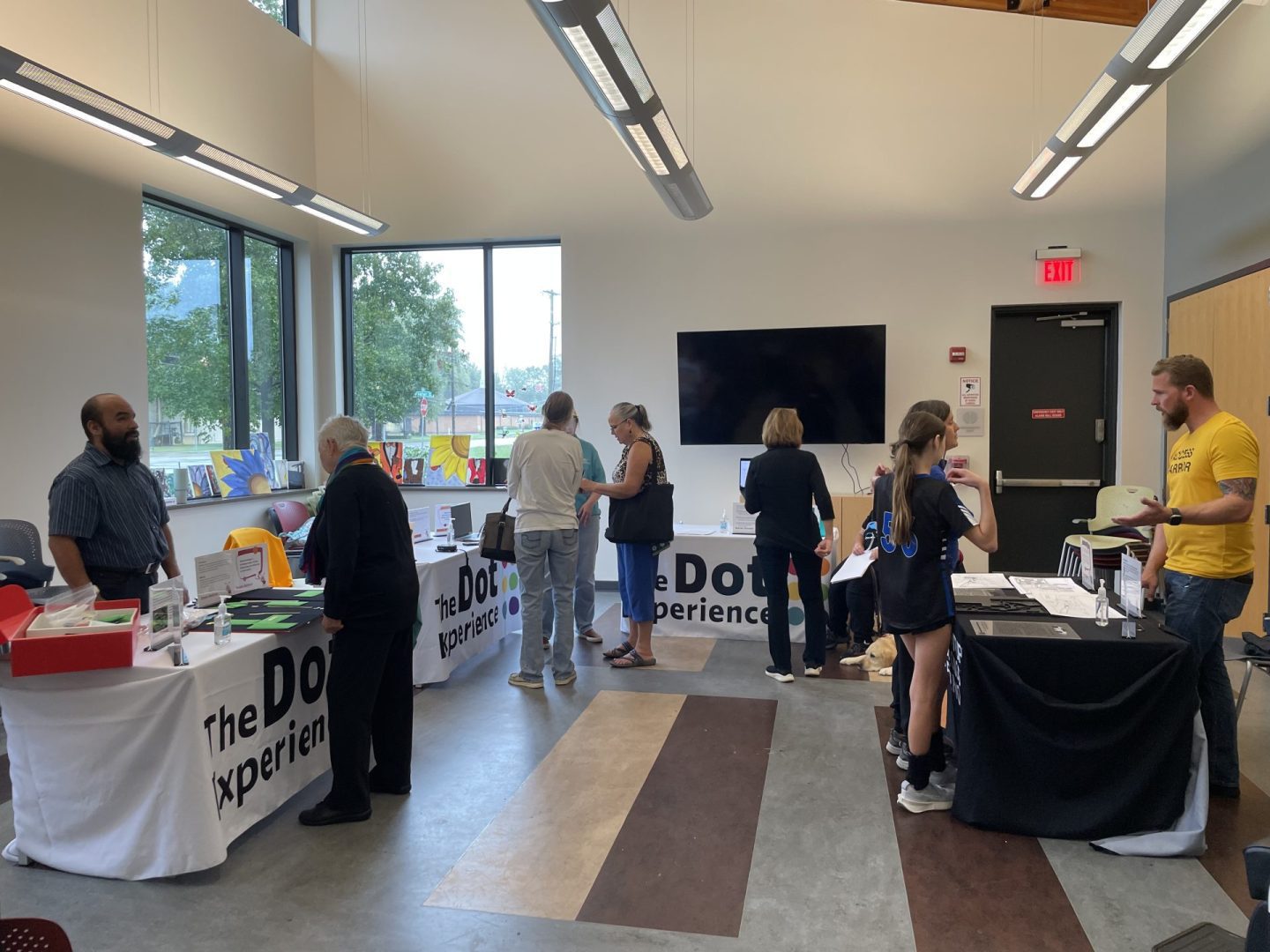
In our fast-paced world, everyone needs the ability to move freely and confidently. At APH, we’re dedicated to ensuring that independence is easily accessible for people who are blind or low vision. That’s why at our recent Connect the Dots event, held on September 28th at the Newburg Library, we introduced visitors to the different facets of Orientation and Mobility (O&M). O&M encompasses the essential skills and tools that help people navigate their surroundings safely and efficiently—skills that foster independence, confidence, and the freedom to explore. Under the guidance of station leaders who are blind or low vision, families experienced hands-on demonstrations of both low-tech and high-tech tools that aid in independent travel. Each activity station provided valuable insights into the methods and technologies used every day by a vast community of people who are blind or low vision.
One of the first stations showcased was Tactile Town, an interactive 3-D model designed to teach spatial awareness and cognitive mapping skills. For individuals who are blind or low vision, spatial concepts can be difficult to grasp using traditional 2-dimensional maps. Tactile Town offers a more intuitive, hands-on experience, making it easier for users to understand their environment and build vital O&M skills. Visitors also had the opportunity to learn about the everyday tools that blind or low vision individuals rely on to travel safely. For example, our Education Associate, Mary R., demonstrated how the white cane serves as an extension of a person’s senses, helping them detect obstacles, changes in the walking surface, and other key environmental cues. This simple, yet powerful tool offers users confidence in navigating the world around them. Jess M., an APH volunteer, introduced her guide dog, Joyce, who assists her in navigating daily life. Jess shared how guide dogs are specially trained to lead their owners safely and went over etiquette on how to act around guide dogs when they’re working. One of the high-tech items featured at the event was the VR Cardinal LE, a portable GPS system specifically designed for people who are blind or have low vision. This device provides auditory guidance to help users navigate their surroundings with confidence. One of its standout features is the “Where Am I” key, which offers real-time information about the user’s location and surrounding environment, making independent travel more accessible than ever before.
At our last station, visitors learned about APH’s future plans to incorporate these tools and practices into our new museum, The Dot Experience. This revolutionary museum will redefine accessibility, ensuring that every visitor can explore and interact with the entirety of the museum, not just specific portions. The museum will utilize Inclusive Design Standards and will incorporate a variety wayfinding tools such as tactile maps, Braille signage, and tactile exhibit markers to allow for seamless exploration. Just inside the entrance, visitors will find a wayfinding station where they can choose the tools that work best for them—whether it’s a 3-D tactile map, audio guides, or something else entirely. Our goal is to create a space where everyone feels empowered to engage and learn at their own pace, with accessibility embedded into every detail. We can’t wait to open our doors and welcome guests! Until then, make sure to join us at our Connect the Dots events and be sure to follow The Dot Experience on Facebook and X for updates on the museum.
Share this article.
Related articles
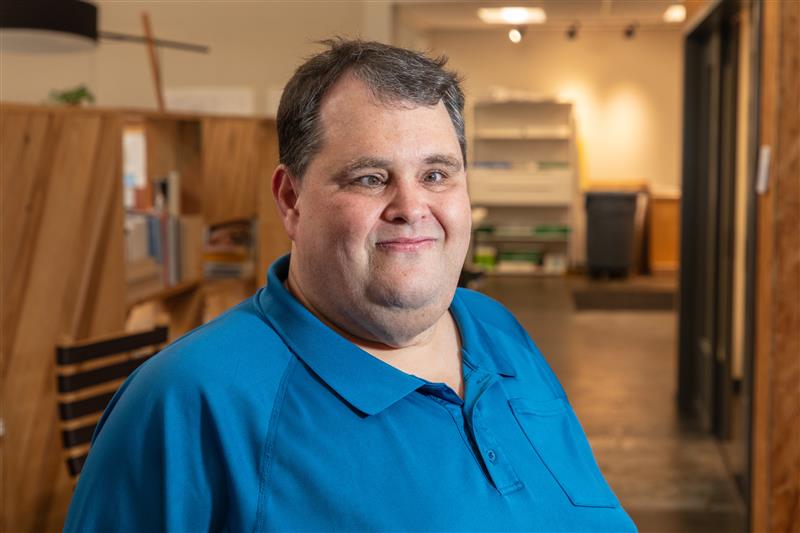
Creating The Dot Experience: Prototyping with Scott Spaulding
The Dot Experience is a unique, fully inclusive museum experience. Images, sounds, artifacts, and exhibits have each been carefully constructed to ensure every...
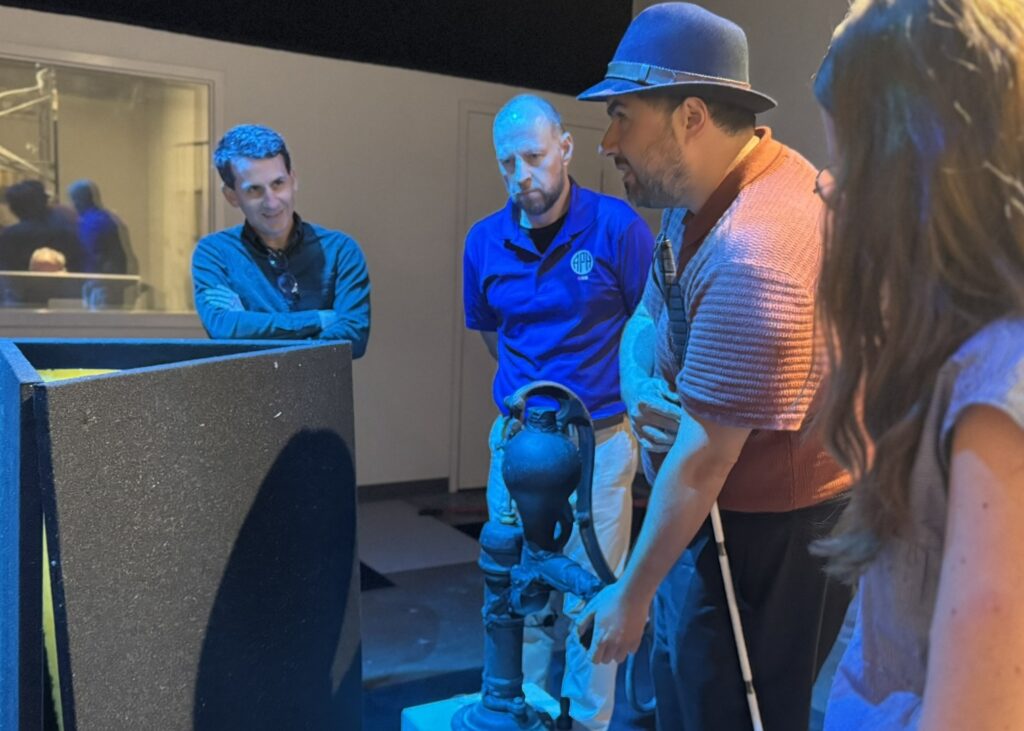
Bringing Helen Keller’s Water Pump to Life at The Dot Experience
What was it like for six-year-old Helen Keller to discover language? Those seconds of wonder, understanding, and awe are frozen...
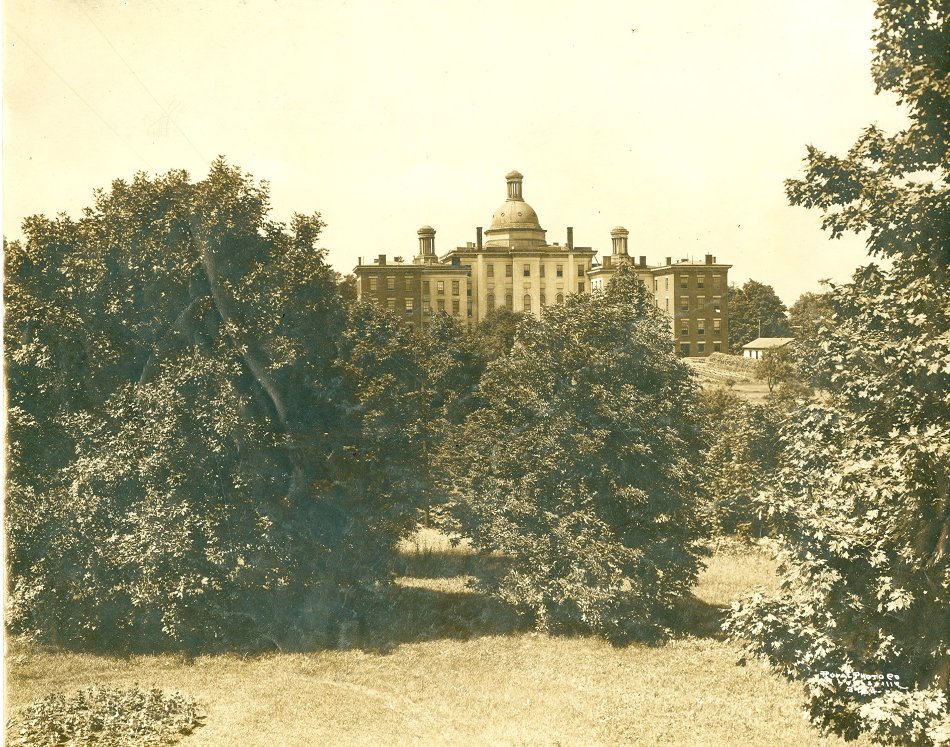
KSB and The Dot Experience
Nestled beside The Dot Experience, the Kentucky School for the Blind (KSB) has been woven into the Louisville community since...